

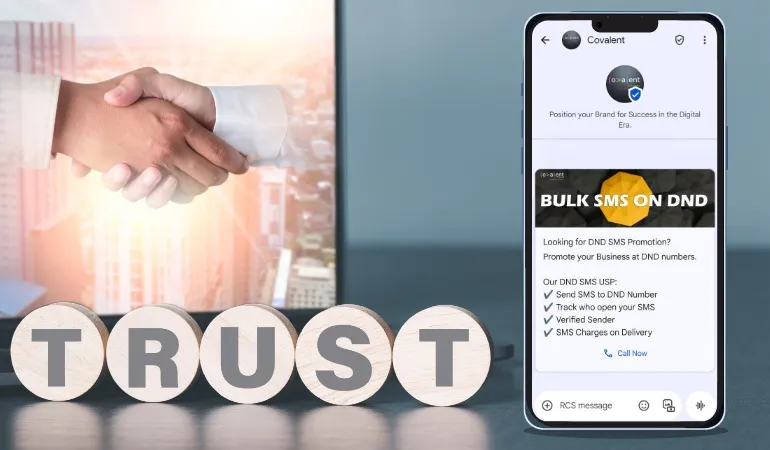
In a digital era where belief and action go hand in hand, communication must evolve beyond straightforward content. Enter Rich Communication Services (RCS SMS): a mobile messaging protocol that overhauls the ancient SMS into something far more intelligently, branded and compelling. By leveraging RCS SMS appropriately, brands can not as it were to reinforce buyer belief but to drive significant conversions.
What is RCS SMS?
At its core, RCS SMS (brief for Rich Communication Services) is a cutting-edge alternative to SMS/MMS. It underpins high-quality media (pictures, video, GIFs), interactive components (buttons, carousels, fast answers), and conveys messages from a "verified" brand sender profile.
Unlike standard SMS, which is for the most part plain content and joins, RCS SMS offers an informative involvement closer to an in-app or chatbot interaction.
Its business-oriented frame (regularly called RCS SMS Business Messaging or RBM) permits brands to engage directly with clients through native messaging apps.
What makes RCS SMS curiously:
• Branded sender information (symbol + brand title)
• Wealthy media & intuitively highlights
• Analytics for engagement and conversion
These highlights combine to make a stronger platform for promoting and client service.
Why RCS SMS things for conversions
Conversion implies turning a prospect into an action-taker: making a buy, booking a benefit, submitting a frame, or reacting to a call-to-action. RCS SMS upgrades that way in a few key ways:
1. Streamlined user journeys
With RCS SMS, you can embed actionable buttons inside the message—"Shop Now", "Book Appointment", "Choose Colour", etc. That reduces the friction between seeing the offer and taking action.
For example, a user doesn't need to click a link, wait for a website, or fill lots of fields. They get an interactive card, select options and complete a step right within the message. That simplicity often leads to higher conversion rates.
2. Rich visuals that drive engagement
Messages with visuals (picture carousels, recordings, item displays) capture consideration more successfully than plain content. RCS SMS supports these media types natively.
When the brand can show item shots, videos, or intuitively previews, the beneficiary is more likely to feel informed and motivated to act.
3. Better tracking + optimisation
With RCS SMS, you can get analytics on conveyance, open, examined, button clicks, even a few behavioral ways.
Brands can observe how individuals engage with each message, spot drop-off points, test diverse CTAs, and refine campaigns. That implies the conversion way becomes data-driven or maybe than speculating.
4. Brand presence and credibility
Because the message shows the brand's logo, verified profile, and custom branding (colour, identity), recipients recognise it immediately as legitimate. That builds trust.
Believe is a prerequisite for conversion: individuals tend not to tap or react to messages from unknown or unbranded senders.
5. Two-way discussion and personalization
RCS SMS not as it were allows richer messages, but moreover permits answer alternatives, conversational flows, and custom ways based on what the client chooses.
When a brand treats the client more like a member in a conversation or maybe than a passive recipient, the engagement deepens—and so does the probability of conversion.
Why RCS SMS matters for brand trust
Conversion is important, but without trust you can't sustain growth. RCS SMS offers several trust-building advantages:
Verified sender identity
A recurring problem with SMS is impersonation, spam or phishing. With RCS SMS, brands can show verified sender profiles which reassure the recipient they are interacting with the real brand.
That verification is particularly useful for sectors like banking, telecom, health services where trust is critical.
Consistent brand experience
When your messaging carries your brand logo, correct colours, and a polished look rather than plain text, you reinforce your brand identity. Over time that consistency makes a difference the client see and depend on your messages.
When clients recognise your brand and feel it's trustable, they're more willing to engage.
Secure and advanced impression
Though not safe to risks, RCS SMS informing gives the impression of a advanced, secure channel (especially when compared to essential SMS). It signals that your brand is keeping up with communication measures and cares about client involvement.
That impression matters in building trust.
Engaging rather than annoying
Because RCS SMS allows better design and user-controlled interactions (e.g., quick option buttons, interactive content) the messages can feel helpful rather than spammy. When users feel they are being listened to and given control, trust grows.
Practical use cases: How brands can apply RCS SMS
Use-case 1: Product promotion with carousel & one-tap purchase
A retail brand sends an RCS message featuring a carousel of new arrivals, each with an image, brief description, and a "Buy Now" button. The user sees media, chooses what they like, taps directly, and lands on checkout—all within the flow of the message. Less steps mean less drop-offs.
Use-case 2: Appointment scheduling
A service provider (e.g., dental specialist, salon) employments RCS SMS to send appointment updates: message appears brand logo, alternatives like "Reschedule", "Cancel", "Confirm". The user taps "Confirm" and they're done. No need to call, no need to open a website. Smooth, trusted, efficient.
Use-case 3: Customer support or fulfilment updates
A logistics or e-commerce brand uses RCS SMS to send a "your package is out for delivery" message. The message includes a tracking link, estimated time and maybe a small image of the delivery truck or the order. The brand identity is present, message looks high-quality. This builds trust that "yes, this is really our message; we are handling the delivery".
Use-case 4: Feedback & loyalty programs
After buying, the brand sends an RCS message inviting the customer to take a quick two-question survey via quick-reply buttons. Based on the reply, the client gets an instant reward or a link to claim a dependability benefit. Since the client is already engaged and the format is simple, completion rates tend to be higher.
Best-practice steps for executing RCS SMS
• Ensure your audience supports RCS SMS
• Establish branding & verified sender profile
• Design message flows with interactive elements
• Segment and personalise
• Measure and iterate
• Mind user experience and permission
• Fallback strategy
Key challenges and considerations
• Device/carrier fragmentation
• Cost/integration
• User opt-in and consent
• Spam concerns
• Security/encryption
Summary
In whole: for a brand looking for more noteworthy conversion and enhanced trust, RCS SMS represents an effective overhaul to traditional mobile messaging. By conveying branded, wealthy, intuitive messages specifically in a user's native messaging app, you decrease contact in the transformation way and at the same time strengthen your personality and reliability. The closer you bring the encounter of browsing, choosing and acting into a single streamlined message, the superior your chances of turning intrigued into activity. In the interim, the steady brand presence and verified sender profile offer assistance to ensure the beneficiary sees you as credible rather than fair another non specific message.
As with any channel, the victory depends on mindful usage: the right inventiveness, the right timing, solid permissions, analytics, and fallback planning. Brands that get the balance right will discover RCS SMS a capable device in their customer-engagement and conversion arsenal.
FAQs
RCS bolsters wealthy media (pictures, video, GIFs), intelligently highlights (buttons, speedy answers), branded sender personalities (symbol + confirmed profile), and more profound analytics. SMS is restricted to content (and a straightforward interface), MMS includes media but needs the brand character and interactivity of RCS.
In brief, RCS SMS feels more like a mini-app experience inside messaging, though SMS is static.
Not, however. Whereas RCS SMS is increasingly supported globally, device/OS/carrier compatibility still changes. A few clients may not have all features, or may get a fallback as plain SMS.
It’s vital to check your market, carrier support and client base before depending exclusively on RCS SMS.
Yes. Because the path from message to action is shorter (fewer clicks, richer context, embedded CTAs), RCS tends to yield higher engagement and conversion potential. Brands have reported significantly improved click and response rates using RCS campaigns.
But results still depend on how well the campaign is designed and targeted.
RCS helps believe through: (a) branded sender personality (so clients know it’s truly you), (b) higher-quality message involvement (which reflects professionalism), (c) richer, more significant communication (which clients interpret as more thoughtful).
When clients feel that messages from a brand are authentic, convenient and valuable, their certainty in that brand develops.
Confirm your user base supports RCS SMS (or build a fallback).
Use branded sender identity (logo, colours).
Design interactions with minimal friction (buttons, carousels, short flows).
Segment clients and customize messaging.
Track performance through analytics (opens, clicks, conversions) and adjust.
Provide clear opt-out or fallback paths.
Yes. Some of the challenges:
Not all devices/carriers support full RCS SMS yet.
Cost and technical complexity may be higher than for basic SMS.
Security and encryption vary by region; some users may still view messages with suspicion.
