

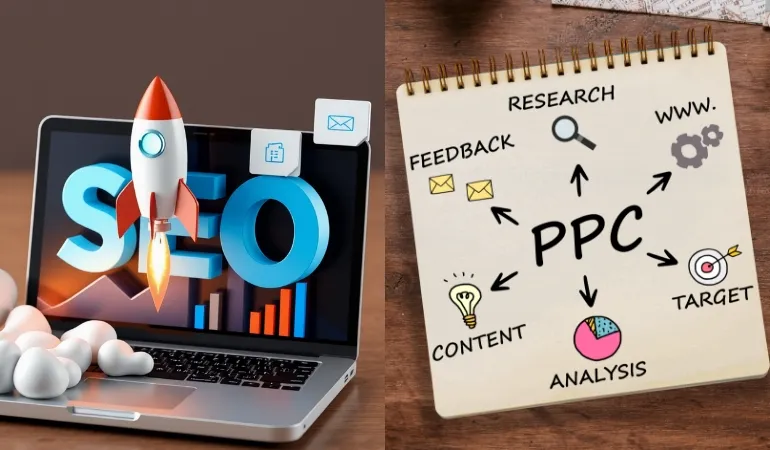
Search Engine Optimization and Pay-Per-Click are two major aspects in Digital marketing to increase website traffic and brand visibility. Both have the same objective of increasing website visibility, their working methods and the nature of their results differ. We differentiate between these two and see which technique might be right for your business vertical.
What is Search Engine Optimization?
As we know that, Search Engine Optimization is the process of improving the website visibility and ranking in search engine results pages through different techniques. SEO includes optimizing the content of the website, technical setup and link profile so that search engines can easily understand and rank it higher.
Types of SEO:
On page SEO: On page, We optimize our website according to Google and make them search engine compatible.
Off page SEO: Off page, we can create quality back links on different network sites.
Key points:
• Way to rank a website organically.
• Provides long-term and sustainable traffic.
• The cost is lower but this is a time-consuming process.
• Provides reliable results.
What is the meaning of Pay Per Click?
Online advertising applied in Pay Per Click by which advertisers pay for each click. These ads appear on different platforms. In pay per click ads are shown immediately and generate quick traffic.
Key points:
• The advertiser pays only for clicks that lead to the website.
• A method for generating immediate traffic and leads.
• Costs high and requires a regular budget.
• Gives immediate results, but traffic may drop off once the budget is exhausted.
• The imp part is to optimize texts of ads with proper keywords and manage landing pages.
What is the Key differences Between Search Engine Optimization and Pay Per Click
Below, we explore the key differences between SEO and PPC in detail.
Ranking and Traffic Source
SEO:
• In SEO, a website ranks organically. This means that Google or other search engines naturally rank the website higher.
• Traffic comes for free through natural search results.
• Long-term results.
PPC:
• In PPC, an advertiser pays to have their website appear at the top of search results. This is a payment-based system.
• Paid advertising.
• Immediate results.
Cost
SEO:
• SEO costs less initially. The main expenses are content creation, website optimization, and backlink building.
• Low cost, permanent results.
• Invests time and effort.
PPC:
• Pay Per Click requires payment for each click. If your keywords are competitive, then Cost Per Click will be higher.
• High cost, immediate results.
• Invests money.
Duration of Results
SEO:
• SEO results take time to appear. It can take weeks to months for a website to rank higher.
• Long-term Productiveness.
• Permanent traffic.
PPC:
• PPC results are visible immediately. Traffic starts as soon as the ad goes live.
• Immediate results.
• Traffic only during the paid period.
Trust and Credibility
SEO:
• Websites with organic rankings are reflected on more reliability by users.
• Increases brand credibility.
PPC:
• Advertised links may sometimes be considered less trustworthy by users because they are paid for.
• Brings quick traffic but lowers credibility.
SEO and PPC Comparison Table
| Category | Search Engine Optimization (SEO) | Pay Per Click (PPC) |
|---|---|---|
| Definition | Process of increasing website visibility in organic search results. | Pay Per Click model where businesses pay when someone clicks on their ad. |
| Time to See Results | It takes time to build rankings and traffic. | Delivers instant visibility and results once ads go live. |
| Traffic Type | Organic and long lasting. | Paid and temporary: stops when the budget runs out. |
| Return on Investment | Higher long term ROI after consistent effort. | High short term ROI but requires consistently spending. |
| Click Rate | Typically lower at first but grows consistently with better ranking. | Higher initially due to ad placement at the top of search results. |
| Trust and Reliability | Creates user trust over time through unique content and ranking. | Viewed as sponsored content, often less trusted than organic results. |
| Longevity | Long-term benefits that continue after optimization. | Short-term exposure; stops when ads are paused. |
| Ideal For | Long-term brand growth and authority. | Immediate visibility, seasonal offers, and new product launches. |
Benefits of SEO
Search Engine Optimization is not only to increase traffic, but also to improve brand reputation and reliability.
• Sustainable traffic and long-term results.
• Better ROI at lower cost.
• Organic traffic is more reliable.
• Better user experience (UX) and site structure.
• More leads and sales in the long term.
Benefits of PPC
PPC is a paid digital marketing strategy in which advertisers pay per click. Its primary objective is to generate immediate traffic and leads. Its key benefits are detailed below:
• Instant traffic and leads.
• Easy to measure ad performance.
• Reach targeted audiences.
• You can start or stop campaigns right away.
• Visibility even on highly competitive keywords.
Using SEO and PPC Together
Most businesses use SEO and PPC together. This is because both techniques can complement each other's weaknesses.
• Get immediate traffic with PPC, long-term with SEO.
• Use keyword data to improve SEO strategy.
• Helps increase brand visibility.
• This helps use the marketing budget in the best way possible.
FAQs
It is based on your goal. If you want quick results, PPC is better. If you want long-term results, SEO is suitable.
It depends on your keywords, competition and click count.
It depends on the quality of content, domain age and some other aspects. SEO can take 3-6 months for results.
Many businesses discover that a more effective marketing strategy can be achieved by both approaches.
SEO has a higher ROI in the long term. PPC has an instant ROI, but results don't show up once the budget is burned out.
